
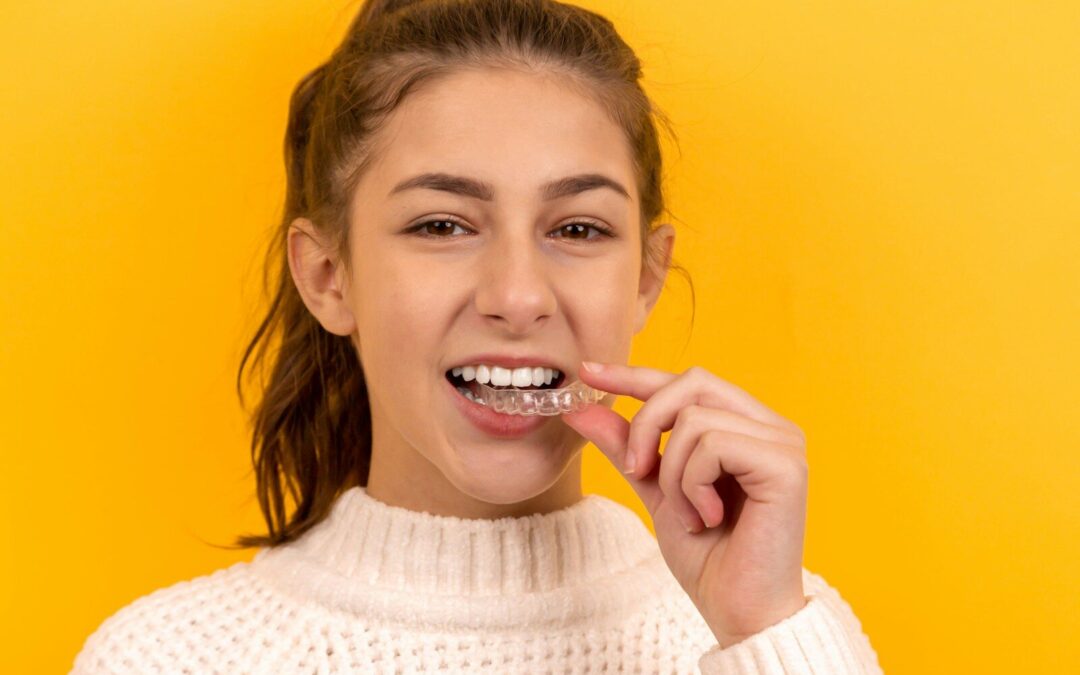
Choosing the right orthodontic treatment is one of the most important decisions a patient can make. Braces and clear aligners each have real strengths, but braces continue to outperform Invisalign in several clinically important areas, especially for complex cases, patients with compliance challenges, and those who want the most dependable long-term results.
Why Braces Still Win: Control, Consistency, and Complex Case Power?
Braces deliver continuous, uninterrupted force directly through bonded brackets and archwires, giving the orthodontist precise command over the direction and magnitude of every tooth movement. This mechanical advantage is central to the Invisalign vs. braces effectiveness debate, and it is why braces remain the stronger clinical choice when cases are anything but straightforward.
Research from Texas A&M University College of Dentistry confirms that clear aligners are ineffective for certain movements, particularly intruding teeth, extruding posterior teeth, and derotating cylindrical teeth like canines and premolars. Braces handle all of these scenarios with reliable force application, making them the preferred tool for:
- Severe crowding: Brackets allow progressive arch development with precise wire sequencing.
- Large rotations: Metal ligatures and rectangular wires provide root control that aligners simply cannot replicate.
- Impacted teeth: Surgical exposure combined with bracket bonding guides impacted teeth into the arch in a controlled sequence.
- Major bite corrections: Elastics and auxiliary springs can be added mid-treatment to correct Class II or Class III discrepancies at any stage.
When comparing clear aligners vs. metal braces, the core distinction is control. Tray-based staging pre-programs movements at the lab, but braces let the clinician bend, reshape, or replace wires at every visit, which means fine adjustments happen in real time rather than waiting for a new aligner series.
What Is Faster: Braces Or Invisalign?
The speed question does not have a single answer. It depends on case complexity, patient habits, and whether auxiliaries are needed. A 2024 retrospective study published in the Journal of Pharmaceutical and Bioallied Sciences found that Invisalign averaged 18 months compared to 24 months for conventional braces across a mixed malocclusion group. However, a randomized controlled trial from Texas A&M found the opposite result: braces patients finished 4.8 months earlier than aligner patients in Class I simple malocclusion.
The key factors that drive speed are the following:
- Continuous vs. intermittent force: Braces apply force every hour of every day. Aligners only work when worn.
- Patient compliance: Aligners require 20 to 22 hours of daily wear. Any missed time slows tooth movement and extends the timeline.
- Refinement scans: Every Invisalign patient in the Texas A&M trial needed at least one refinement scan, adding weeks or months to total duration.
- Orthodontist intervention frequency: Braces allow a clinician to adjust mechanics at every appointment, accelerating progress in complex movements.
Typical treatment time ranges:
| Case Complexity | Braces | Invisalign |
| Mild | 12–18 months | 6–18 months |
| Moderate | 18–24 months | 18–24 months |
| Severe | 24–36 months | May not be suitable or requires much longer |
For non-compliant patients or complex cases with bite correction, braces are routinely faster because they remove the compliance variable entirely.
Durability, Costs, and Real-World Compliance: Why Braces Can Be More Reliable
One of the most compelling arguments in the clear aligners vs. metal braces discussion is reliability. Braces stay on the teeth until the orthodontist removes them. There are no trays to lose, forget in a restaurant, or skip on a busy morning. That single fact reduces the most common cause of treatment delays in aligner therapy.
The 2024 comparative study also found that traditional braces showed a slightly lower relapse rate (10%) than Invisalign (12%), suggesting a trend toward better long-term stability. While the difference was not statistically significant, it supports the case for braces in patients who want maximum predictability.
Cost considerations:
- Braces carry a transparent upfront cost with fewer additional charges.
- Invisalign treatment can incur extra costs for replacement trays (lost or damaged aligners are common), refinement scans, and additional aligner stages.
- For patients who repeatedly need refinements, the total Invisalign cost can exceed the braces estimate significantly.
Lifestyle trade-offs:
- Braces require avoiding hard, sticky foods to protect brackets.
- Oral hygiene takes more effort with braces because food traps around brackets.
- However, the reliability for patients with unpredictable or fast-paced routines is significantly higher with fixed appliances.
For families, teenagers, and adults who want treatment that simply works without constant self-monitoring, braces remove the guesswork.
Aesthetic and Comfort Considerations: When Braces Are Still the Right Choice
The most common reason patients gravitate toward Invisalign is appearance. Braces are visible and that matters to many people. But modern orthodontics has addressed this directly with several low-profile options that keep the mechanical strength of fixed appliances while dramatically improving aesthetics.speaksorthodontics+1
Modern brace options that reduce visibility:
- Ceramic brackets: Tooth-colored or clear brackets that blend with the enamel, maintaining full bracket-and-wire control with a much subtler look.
- Self-ligating systems: Low-profile metal or ceramic brackets that use sliding clips instead of elastic ties, reducing bulk and friction.
- Lingual braces: Placed on the inside surfaces of the teeth so they are completely hidden from view while delivering the full range of movement available with fixed appliances.
On comfort, braces do cause initial soreness and can irritate the soft tissue along the cheeks and lips, especially in the first few weeks. However, they eliminate the mid-treatment frustrations unique to aligner therapy: no lost trays, no broken attachments on a work trip, and no forgotten compliance hours.
Decision Checklist—Choosing Between Braces and Invisalign:
| Factor | Choose Braces | Choose Invisalign |
| Complexity | Severe crowding, rotations, bite correction | Mild to moderate alignment issues |
| Compliance | Prefer a set-and-forget system | Highly disciplined with daily wear |
| Budget | Predictable single cost | Comfortable with potential add-on costs |
| Aesthetics | Open to ceramic or lingual options | Priority is near-invisible treatment |
| Speed | Complex case with shortest reliable timeline | Simple case, excellent compliance expected |
At Dental Magik, the goal is always to match the treatment to the patient, not the other way around. Braces remain the stronger clinical choice for a large portion of orthodontic cases, and the evidence supports recommending them whenever control, compliance, and long-term stability matter most. Talking to your orthodontist directly, rather than deciding based on trends or advertising, is always the most important first step.
Dental Magik in East Brunswick offers both Invisalign East Brunswick treatment and traditional braces, giving patients a choice between a discreet removable option and a fixed system built for maximum control. For many cases, braces still deliver more predictable movement, fewer compliance issues, and stronger results for complex alignment needs.
Sources: